IP ratings appear on industrial connectors, enclosures, and equipment throughout specification documents and product datasheets — but the numbers are not always well understood by the people selecting components. IP67, IP68, and IP69K are three of the most frequently specified ratings in industrial Ethernet and automation environments, and they are not interchangeable. A connector rated IP68 does not automatically pass IP69K testing. A product rated IP69K is not necessarily suitable for prolonged submersion. Selecting the wrong IP rating for the installation environment is a straightforward way to introduce failure modes that are difficult to diagnose once the installation is in service.
This guide explains what IP ratings are, what the two digits mean, what the test conditions behind IP67, IP68, and IP69K actually involve, and how to select the correct rating for industrial Ethernet and connector applications.
What IP ratings are and how they work
IP stands for Ingress Protection — a standardised rating system defined by IEC 60529 that describes the degree of protection provided by an enclosure or connector against the intrusion of solid objects and liquids. The rating consists of two digits: the first describes protection against solid objects and dust, the second describes protection against water and other liquids. A higher digit means a higher level of protection.
The first digit ranges from 0 (no protection) to 6 (dust tight — complete protection against contact and ingress of dust). In the context of industrial Ethernet connectors and industrial infrastructure, a first digit of 6 is the standard requirement — any connector that will be exposed to dust, particles, or debris in an industrial environment should carry a 6 in the first position. The three ratings covered in this guide — IP67, IP68, and IP69K — all have a 6 as their first digit, meaning all three provide complete dust protection.
The second digit — and in the case of IP69K, the suffix K — defines the level of liquid ingress protection. It is this second digit that distinguishes IP67, IP68, and IP69K from each other, and it is where the specific test conditions behind each rating become important for correct product selection.
IP67 — temporary immersion
The “7” in IP67 denotes protection against temporary immersion in water. The test condition under IEC 60529 is immersion to a depth of 1 metre for 30 minutes. The device must survive this without water ingress that would affect its function. IP67 is a standardised test with fixed conditions — depth and duration do not vary by manufacturer.
IP67 is the baseline protection rating for industrial Ethernet connectors deployed in environments where water exposure is incidental — rain, splash, condensation, and occasional wash-down with low-pressure water. It provides adequate protection for the majority of indoor and sheltered outdoor industrial installations where the connector will not be deliberately or continuously submerged.
The practical limit of IP67 is that it is rated for temporary immersion, not sustained submersion. A connector rated IP67 installed in a position where it is regularly or continuously submerged — a drainage channel, an underwater installation, or a regularly flooded floor — is operating outside the specification the rating covers. For those applications, IP68 is the correct specification.
IP68 — continuous immersion
The “8” in IP68 denotes protection against continuous immersion in water beyond the conditions covered by IP67. Here the standard differs significantly from IP67 in an important way: IEC 60529 does not specify fixed test conditions for IP68. The standard only requires that IP68 protection must exceed that of IP67 — the specific depth and duration of immersion testing is agreed between the manufacturer and the customer, and must be declared by the manufacturer.
This means IP68 ratings can vary significantly between manufacturers. One manufacturer’s IP68 rating may mean tested to 1.5 metres for 1 hour; another’s may mean tested to 3 metres for 72 hours. Both are legitimately IP68 rated under the standard. When selecting IP68 components for an application where depth and duration of submersion matter, the manufacturer’s specific test conditions should always be confirmed — not just that the product carries an IP68 rating.
For industrial Ethernet applications where connectors may be submerged in water pits, trenches, or outdoor installations in areas that regularly flood, IP68 with confirmed depth and duration ratings appropriate to the installation environment is the correct specification. The higher cost of IP68 over IP67 components reflects the more demanding sealing materials and construction required — typically fluorocarbon O-rings, thicker sealing structures, and more stringent manufacturing process control.
IP69K — high pressure, high temperature washdown
IP69K is the highest rating in the IP system and covers a completely different type of water exposure to IP67 and IP68. Where IP67 and IP68 test against static immersion, IP69K tests against high-pressure, high-temperature water jets — the conditions found in industrial washdown procedures in food processing, pharmaceutical manufacturing, automotive plants, and other environments where equipment must be regularly cleaned with steam and high-pressure water.
The test conditions for IP69K are precisely defined. Water at 80°C is delivered at 80 to 100 bar pressure at a flow rate of 14 to 16 litres per minute through a nozzle held 10 to 15 centimetres from the device being tested. The device sits on a rotating turntable and is subjected to the jet at four angles — 0°, 30°, 60°, and 90° — for 30 seconds at each angle. These conditions replicate the high-pressure steam cleaning procedures used in heavy hygiene environments. The “K” suffix originates from the German DIN 40050-9 standard from which IP69K was derived before being incorporated into the IEC system.
The critical practical point about IP69K is that it does not imply immersion protection. The test involves high-pressure jet exposure, not submersion — and the failure modes are completely different. A connector that survives IP69K washdown testing may not survive sustained immersion at depth, because the thermal shock of 80°C water and the mechanical force of 100 bar pressure create different sealing challenges from hydrostatic pressure during immersion. If an application requires both washdown resistance and immersion capability, the product must carry both IP69K and IP67 or IP68 ratings independently — one does not imply the other.
IP69K is the correct specification for industrial Ethernet connectors and enclosures deployed in food and beverage processing plants, dairy and brewing facilities, pharmaceutical and medical device manufacturing, vehicle wash bays, and any environment where regular high-pressure cleaning with hot water is part of the operational routine.
IP ratings are not cumulative
One of the most important and most frequently misunderstood aspects of the IP rating system is that ratings are not cumulative or hierarchical in the way the numbering might suggest. A product rated IP68 is not automatically IP67 compliant — it has been tested to IP68 conditions, which exceed IP67, but IP67 certification requires a separate test. A product rated IP69K has not been tested for immersion at any depth. Manufacturers must test independently for each rating they claim.
In practice, many industrial connectors and enclosures carry multiple IP ratings — IP67/IP69K, or IP67/IP68/IP69K — because they have been independently tested and certified to each. Where a product carries dual or triple IP ratings, each applies independently to the conditions it covers. When reviewing a product datasheet, confirming which specific ratings are certified and what the test conditions were for any IP68 claims is the correct approach before specifying for a demanding application.
IP ratings for industrial Ethernet connectors
In industrial Ethernet applications — factory automation, process control, machine vision, and industrial network infrastructure — the IP rating of the connector is as important as the electrical performance of the cable. A perfectly installed Cat6A industrial Ethernet cable terminated with a connector that fails to maintain its IP rating in the installation environment will result in network failures that are difficult to diagnose because they present as intermittent link drops rather than an obvious physical fault.
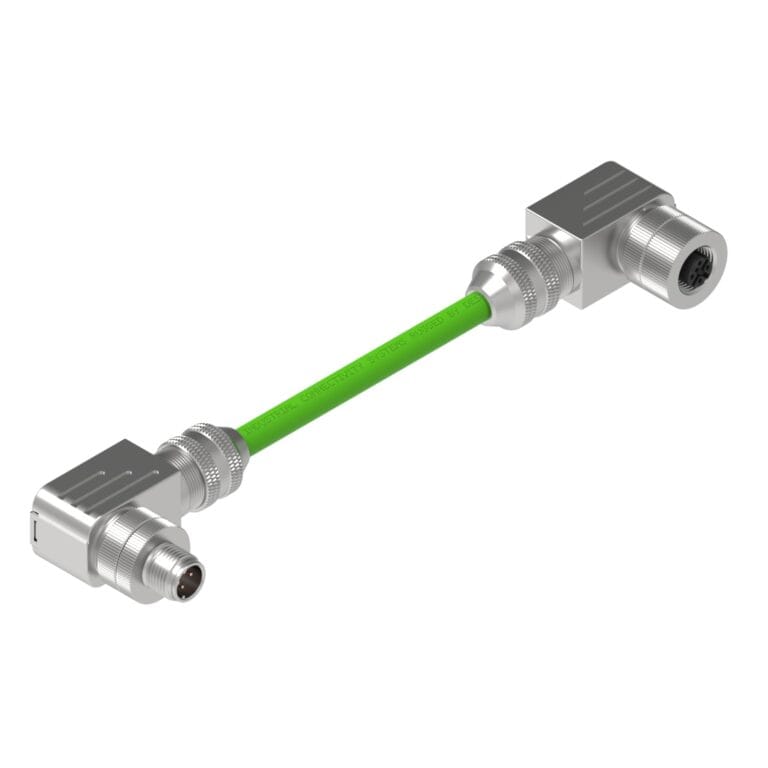
DTECH’s industrial connector range covers the IP ratings required for industrial Ethernet applications across different installation environments. The M12 X-code connector range — including the M12 X-code female front mount socket and M12 X-code male plug — provides IP67 rated 8-pin connectivity for 10 Gigabit industrial Ethernet. The M12 D-code 4-pin connectors and PCB mount variants provide IP67 rated Fast Ethernet and Gigabit connectivity for standard industrial network applications.
For industrial RJ45 applications, DTECH’s 8-pin industrial RJ45 connector provides a ruggedised metal-bodied connector for industrial Ethernet terminations, with back-mount threaded and angled back-mount threaded panel mount RJ45 couplers for panel and enclosure mounting in industrial environments.
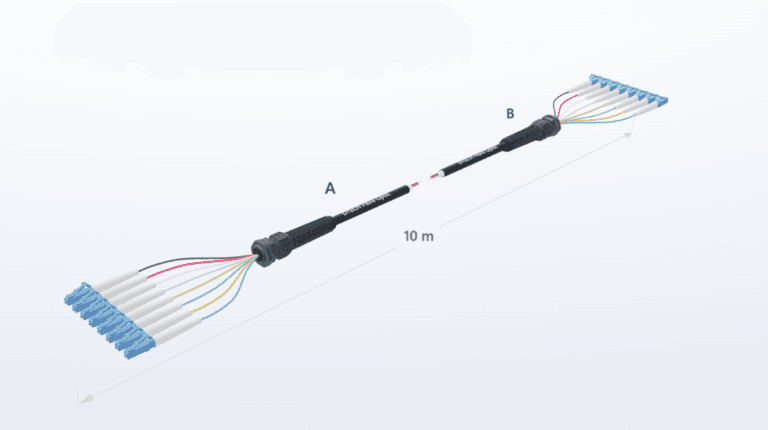
Pre-assembled cable solutions are available across the DTECH industrial range — M12 X-code assemblies, M12 D-code assemblies, and industrial Ethernet leads — providing factory-terminated, IP-rated cable assemblies for direct deployment in industrial network installations. View the full industrial plugs and glands range for cable entry and sealing solutions.
Choosing the right IP rating for the installation environment
| Environment | Recommended rating | Why |
|---|---|---|
| General indoor industrial — dust, splash, incidental water | IP67 | Dust tight, survives temporary immersion and wash-down with low-pressure water |
| Outdoor industrial — rain, flooding, water channels | IP67 minimum, IP68 for submersion risk | IP67 covers rain and splash; IP68 required where connector may be submerged |
| Underground or regularly submerged locations | IP68 — confirm manufacturer’s depth and duration spec | Sustained immersion beyond IP67’s 1m/30min parameters |
| Food and beverage processing — regular high-pressure hot washdown | IP69K | High-temperature high-pressure washdown resistance required |
| Pharmaceutical and medical manufacturing | IP69K | Steam sterilisation and high-pressure sanitisation processes |
| Washdown environments with both immersion and pressure washing risk | IP67/IP69K or IP68/IP69K dual-rated | IP69K alone does not cover immersion — dual certification required |
| Vehicle wash bays, agricultural machinery | IP69K | Regular high-pressure cleaning with hot water |
Frequently asked questions
Is IP68 better than IP67?
For immersion applications, yes — IP68 covers continuous submersion beyond the 1 metre/30 minute parameters of IP67. However, IP68 is a more variable rating because the specific test conditions are manufacturer-defined rather than standardised. For applications that do not involve sustained submersion, IP67 is adequate and has the advantage of standardised, comparable test conditions across all manufacturers.
Does IP69K mean the product is waterproof?
IP69K means the product has been tested to withstand high-pressure, high-temperature water jets at close range — it does not mean the product is rated for immersion. A product that is only IP69K rated has not been tested for submersion. For a product to be suitable for both washdown and immersion, it must carry both ratings independently — typically expressed as IP67/IP69K or IP68/IP69K.
What does the “K” in IP69K mean?
The “K” suffix originates from the German DIN 40050-9 standard that first defined high-pressure washdown protection for automotive and industrial equipment. The standard was subsequently incorporated into the IEC 60529 system, where the 9K designation reflects the fact that this is a higher-than-standard protection level for the second digit — standard IEC 60529 only defines digits 0 through 8, so the 9K rating sits outside the standard numbering as a supplementary classification.
Why do industrial Ethernet connectors need IP ratings when standard RJ45 does not?
Standard RJ45 connectors are designed for controlled indoor environments — server rooms, offices, structured cabling installations in buildings. They provide no protection against dust or water. Industrial environments expose connectors to dust, coolant, wash-down water, vibration, and temperature extremes that would cause an unprotected RJ45 to fail rapidly. Industrial Ethernet connectors — M12 X-code for 10G, M12 D-code for 100M/1G, and ruggedised industrial RJ45 — are constructed with metal housings, sealing O-rings, and locking mechanisms specifically designed to maintain electrical performance and ingress protection under these conditions.
Is M12 always IP67 rated?
M12 connectors when properly mated and locked achieve IP67 as standard. The IP67 rating applies to the connector pair when connected — a single unmated connector without a protective cap does not maintain its IP rating. This is why protective caps for unused M12 ports are specified on industrial installations: an unmated port without a cap is an unprotected opening regardless of the connector’s rated IP level.
Can I use an IP67 connector in a food processing environment?
It depends on the cleaning regime. If equipment is cleaned with low-pressure water spray or wiped down, IP67 is typically adequate. If equipment undergoes regular high-pressure hot water cleaning — which is standard in food and beverage, dairy, and pharmaceutical manufacturing — IP69K is the correct specification. Using IP67-rated connectors in a regular IP69K washdown environment risks seal failure and network connectivity loss, potentially introducing contamination risk if water ingress damages electrical components.
Summary
IP67, IP68, and IP69K all provide complete dust protection as indicated by the first digit 6. The distinction is in the liquid protection. IP67 covers temporary immersion to 1 metre for 30 minutes — the standard for most industrial Ethernet connectors in general industrial environments. IP68 covers continuous immersion at manufacturer-specified depths and durations — the correct specification where sustained submersion is possible. IP69K covers high-pressure, high-temperature washdown at 80°C and 80–100 bar — the standard for food processing, pharmaceutical, and automotive wash environments. IP69K does not imply immersion protection, and IP68 does not imply IP69K washdown resistance. Applications requiring both must specify dual-rated products independently certified to each.
If you need help specifying industrial Ethernet connectors for a specific installation environment, get in touch with the DTECH team — we supply M12 X-code, M12 D-code, and industrial RJ45 connectors and assemblies to industrial installers and automation engineers across the UK, Europe, and the Middle East.